Chinese Kung Fu Summer Camp Itinerary

14-Day Chinese Kung Fu Summer Camp Itinerary

This 14-day Kung Fu summer camp itinerary connects two cultural cities, Beijing and Shanghai (with their itineraries adjusted to sightseeing-focused), along with four major Kung Fu sacred sites: Shaolin Temple, Chenjiagou Village, Wudang Mountain, and Emei Mountain. The itinerary combines urban cultural exploration, authentic Kung Fu training, and Kung Fu cultural origin tracing. Equipped with English-speaking guides and experience programs tailored for foreigners, it helps participants deeply experience the charm of Chinese cities and the combination of hardness and softness as well as cultural connotations of Chinese Kung Fu.
The 14-Day China Kung Fu Discovery: An Epic Summer Camp Journey

This 14-day Kung Fu summer camp itinerary connects two cultural cities, Beijing and Shanghai (with their itineraries adjusted to sightseeing-focused), along with four major Kung Fu sacred sites: Shaolin Temple, Chenjiagou Village, Wudang Mountain, and Emei Mountain. The itinerary combines urban cultural exploration, authentic Kung Fu training, and Kung Fu cultural origin tracing. Equipped with English-speaking guides and experience programs tailored for foreigners, it helps participants deeply experience the charm of Chinese cities and the combination of hardness and softness as well as cultural connotations of Chinese Kung Fu.
Part 1: Beijing Foundations – Imperial History & Cultural Roots

Day 1: Arrival & First Impressions

Welcome to the start of your summer camp adventure! After arriving in Beijing and checking in at our hotel in the historic Dongcheng District, you’ll receive your exclusive summer camp souvenir package. We kick off with ice-breaking activities to form groups and get to know your fellow campers. In the afternoon, we dive into urban sightseeing at Tiananmen Square and the Palace Museum (Forbidden City). Accompanied by an English-speaking guide, you will explore the Hall of Supreme Harmony and the Palace of Heavenly Purity to learn about the architectural history of the Ming and Qing dynasties. We conclude the day at Wangfujing Pedestrian Street for specialty snacks like Peking duck and a "First Impressions of Kung Fu Culture" session.

Day 2: Imperial Gardens & Old Beijing Life

Our second day begins at the Summer Palace with a walk by Kunming Lake to admire imperial garden aesthetics. Next, we visit the Temple of Heaven Park to explore ancient sacrificial culture and the architectural philosophy of "the sky is round and the earth is square." The afternoon takes us to the Nanluoguxiang hutongs, where you’ll step into a traditional siheyuan and paint "Rabbit God" figurines—an intangible cultural heritage craft. The evening features traditional Beijing folk performances, including Peking Opera and shadow puppetry, before we pack for our journey to the heart of Kung Fu.

Part 2: Shaolin Temple – The Birthplace of Zen & Martial Arts

Day 3: Journey to the Sacred Songshan Mountain

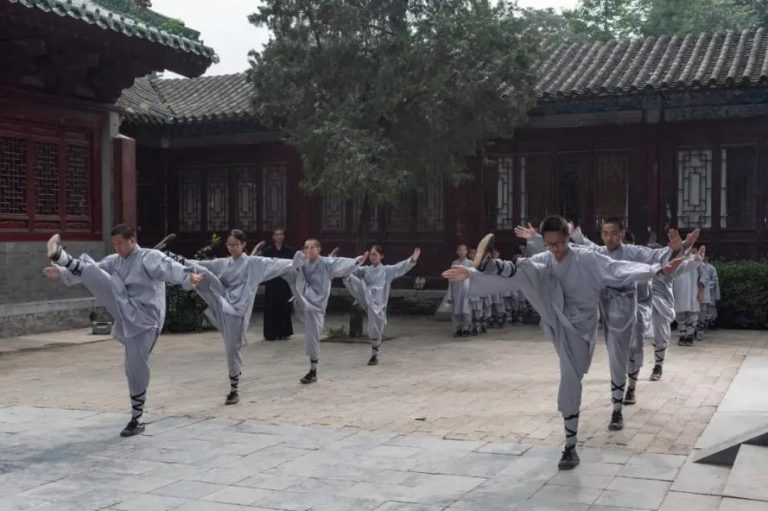
We travel via high-speed train to Zhengzhou, where our guide will explain the historical ties between Songshan Mountain and the Shaolin Temple. After a lunch of local Henan stewed noodles, we head to the Shaolin Temple Scenic Area. Here, you will witness a stunning live performance of authentic Shaolin Kung Fu by warrior monks. The day ends with a Zen opening ceremony, reciting verses with monks to understand the "unity of Zen and Kung Fu."

Day 4: Living the Life of a Shaolin Disciple

Awaken for early morning training at the Shaolin Temple gates, practicing basic horse stances and punches with a master. We then visit the Permanent Courtyard and the historic Pagoda Forest, the final resting place of eminent monks. Afternoon training focuses on the Xiao Hong Quan (Little Red Fist) routine and Shaolin Qigong, balanced with calligraphy classes to practice "movement and stillness." The night concludes with the spectacular "Shaolin Zen Music Ceremony" set against the mountainside.

Part 3: Chenjiagou – The Origin of Tai Chi

Day 5: From Shaolin Strength to Tai Chi Flow

After a morning of consolidating your Shaolin boxing moves and a demonstration for the master, we enjoy traditional Shaolin vegetarian food. We then depart for Chenjiagou Village, the birthplace of Tai Chi. After checking into a Tai Chi-themed homestay, we participate in team-building games at the International Exchange Center to understand the core philosophy: "overcoming hardness with softness."

Day 6: Master the Art of Internal Energy

Morning training begins in the Tai Chi Cultural Park, focusing on breathing and standing postures. We visit the Tai Chi Ancestral Temple and the site where Yang Luchan mastered the art. In the afternoon at Wanxiang Tai Chi Hall, you will learn the three basic forms (Starting, Harmony, and Closing) to comprehend the "rotation of Yin and Yang." We finish the day at the Tai Chi Museum and practice health-preserving exercises to relax the mind.

Part 4: Wudang Mountain – Taoist Wisdom & The Sacred Sword

Day 7: Transition to the Taoist Peaks

We spend the morning perfecting the "eight methods and five steps" of Tai Chi before enjoying medicinal local herbs and cuisine. A bus journey takes us to Wudang Mountain, where our guide explains the unique differences between Wudang and Chen-style Tai Chi. Upon arrival, a Taoist priest introduces us to the concept of "quietness and inaction" to prepare us for mountain life.

Day 8: The Way of the Wudang Sword

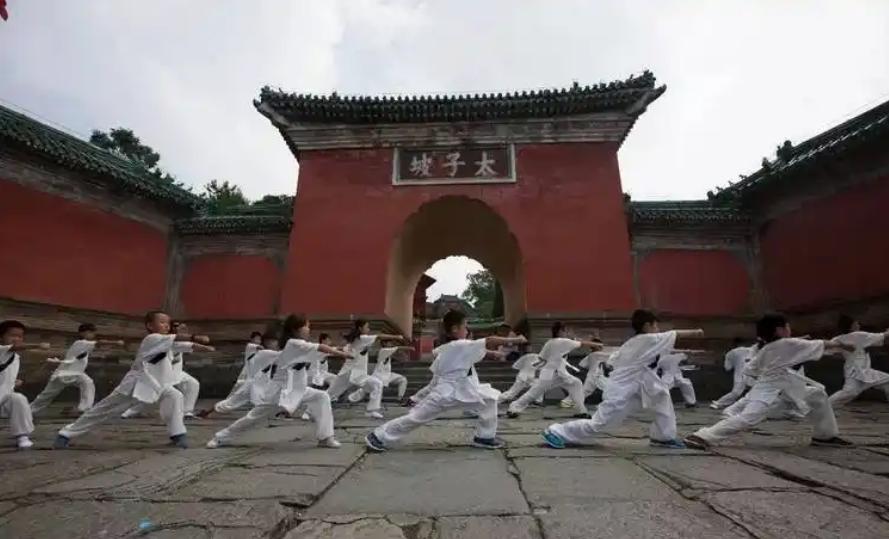
Train in a temple courtyard under the guidance of a Taoist priest, learning the smooth and continuous routines of Wudang Tai Chi. We visit Zixiao Palace to admire its imperial architecture and learn how Wudang Kung Fu "overcomes movement with stillness." The afternoon features the basic moves of the Wudang Sword and sitting meditation skills. The evening includes a simple blessing ceremony and reflection.

Part 5: Emei Mountain – Flexibility & The Martial Spirit

Day 9: The Journey to Chengdu

This morning focuses on advanced Wudang Tai Chi, integrating meditative calm into our movements. After a Taoist vegetarian lunch, we take a high-speed train to Chengdu. Upon arrival, we adapt to the local culture by tasting famous Sichuan snacks and watching a documentary on Emei Kung Fu to prepare for our next sacred site.

Day 10: Entering the Emei Kung Fu Base

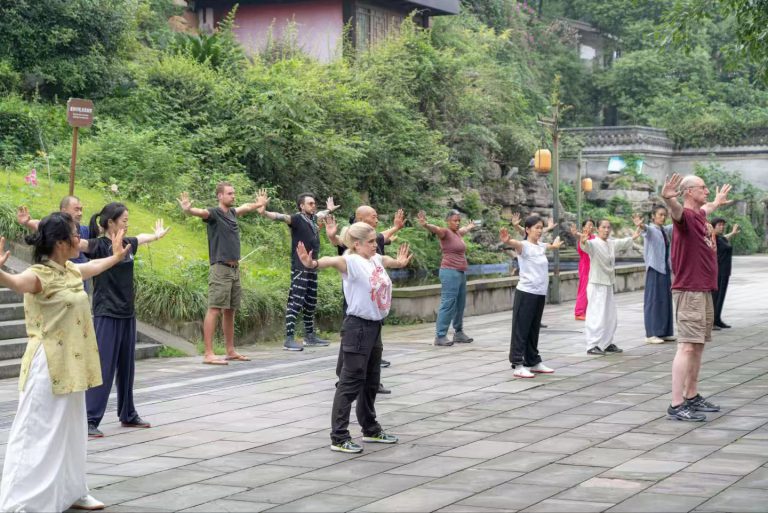
We travel by bus to the foot of Emei Mountain, enjoying local "Qiaojiao Beef" for lunch. In the afternoon, we check into the Emei Kung Fu Inheritance Base, where a master demonstrates the "softness with underlying hardness" style. We begin our physical foundation with traditional log training to build strength in the waist and back.

Day 11: Flexibility & The Golden Summit

Morning training at the base focuses on Emei Boxing flexibility and rhythm. Campers experience unique training methods, including wooden dummies and water-carrying exercises. In the afternoon, we head to the Golden Summit for a flash mob performance by the Emei School Women's Kung Fu Troupe and practice with the traditional giant spear.

Part 6: Shanghai – Modern Marvels & Graduation

Day 12: Transition to the Global Metropolis

After a final demonstration of our Emei Kung Fu skills and a master's evaluation, we take a high-speed train to Shanghai. The evening begins with a walk along the Bund, where we admire the "Gallery of World Architecture" and the neon skyline of the Huangpu River while learning about Shanghai’s modern history.

Day 13: Celebration & City Discovery

Choose between a day of joy at Shanghai Disneyland Resort or the Wild Animal Park. In the afternoon, we explore the classical Yu Garden and the City God Temple to taste local steamed buns. Our final evening features a themed dinner in Lujiazui among skyscrapers, where campers perform impromptu Kung Fu moves in a relaxed, celebratory atmosphere.

Day 14: Graduation & Cultural Reflection

Our final morning is dedicated to the Shanghai Museum, where we admire ancient bronze and ceramics. We hold our official Camp Closing Ceremony, issuing customized certificates and displaying our camp achievements. After a final farewell meal, we arrange transfers for our return journeys, bringing this life-changing Kung Fu summer camp to an end.

Itinerary Supporting Tips

1. Personnel Support: The whole journey is equipped with professional English-speaking guides (responsible for both urban sightseeing explanations and Kung Fu culture translation) and Kung Fu coaches. Some coaches have overseas teaching experience and can accurately explain the details of moves and cultural backgrounds. A full-time medical staff is also available to handle emergencies such as minor sports sprains and travel discomfort.

2. Accommodation & Catering Adaptation: Accommodation prioritizes high-quality hotels close to sightseeing attractions or training venues. For Shaolin Temple and Wudang Mountain, characteristic accommodations near monasteries/Taoist temples are arranged. Catering takes into account both Chinese and Western tastes. Campers' dietary taboos are inquired in advance. Vegetarian meals are provided at Kung Fu sacred sites, while in cities like Beijing and Shanghai, emphasis is placed on arranging local specialty food experiences. Meanwhile, Western-style food such as bread and milk is prepared as alternatives.

3. Material Preparation: Campers are reminded in advance to bring comfortable sportswear and sports shoes (suitable for Kung Fu training) as well as lightweight walking shoes (suitable for urban sightseeing). The training venue provides Kung Fu equipment, rubbing tools, etc. uniformly. Sun protection products, mosquito repellent, and portable rain gear are prepared for campers to meet the needs of outdoor morning training and urban sightseeing.